Writing About Hope After Trauma | The Pickpocket’s Letter
Why The Pickpocket’s Letter Is Ultimately a Story of Resilience
There are some stories that begin with tragedy and never really leave it. Then there are stories in which tragedy is only the beginning.
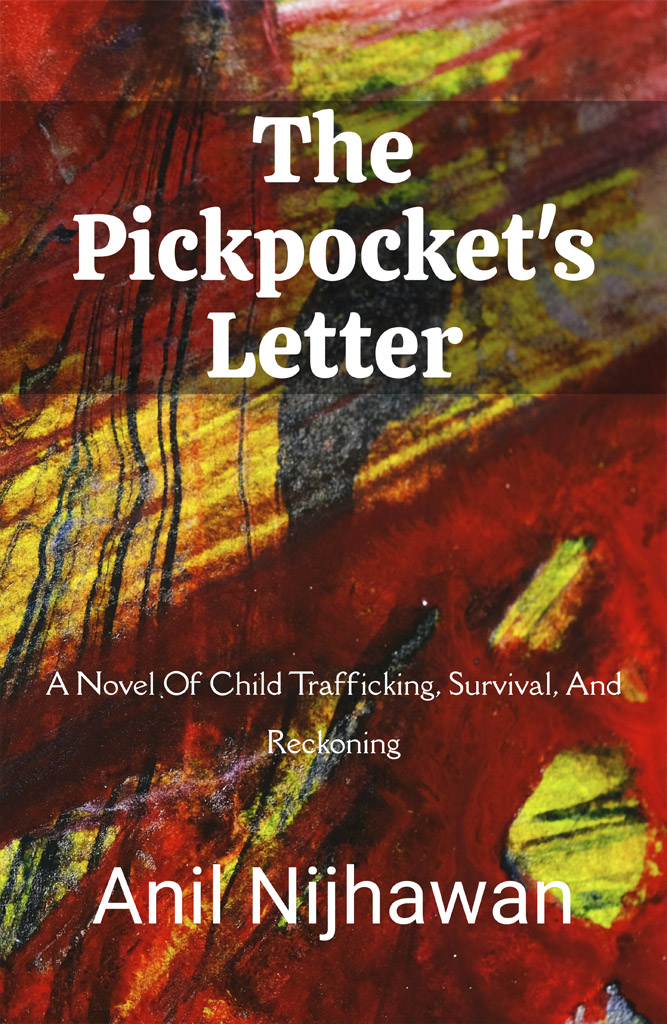
When I began writing The Pickpocket’s Letter, I knew I was entering difficult territory. My protagonist, Deenu, is abandoned as a baby, grows up in an orphanage near Haridwar and, at fifteen, is abducted by a child-trafficking gang and forced into a life of crime.
These are painful circumstances. But I did not want to write a novel in which suffering was the destination. Because the dangers of writing about suffering and trauma are allowing it to define the character completely. I wanted to write about what happens after suffering. What happens when a person who has been denied almost everything still finds the strength to hope?
A child who has been abandoned can easily become simply the abandoned child. A victim of trafficking can become simply the victim. A young criminal can simply become a criminal.
But real human beings are rarely so simple. They are frightened and courageous. They can be angry and compassionate. They can make terrible mistakes and still possess goodness. They can be damaged without being destroyed.
That’s what I wanted for Deenu.
This is one of the ideas that lies behind The Pickpocket’s Letter and, more broadly, behind the kind of Indian literary fiction I am interested in: stories in which characters are shaped by difficult circumstances but are not imprisoned by them.
Deenu Has Almost Nothing
At the beginning of his story, Deenu has very little that most of us take for granted. He cannot read. He cannot write. He has no conventional family. He has little control over where he goes or what happens to him. He is introduced to violence and exploitation at an age when he should still be protected from them.
And yet his capacity to hope remains. It may be buried beneath fear and anger, but it is there. It’s a fact that hope rarely arrives dramatically. Sometimes it comes through another person. For Deenu, it came through his friendship with Sanju. That is particularly important because Sanju does something deceptively simple: He listens. Through Sanju, he is finally given the opportunity to tell his story.
Deenu dictates an open letter to the Prime Minister of India. At first glance, this might seem like an unusual literary device. Why would a teenager who cannot read or write believe that someone in the highest office of the country would listen to him?
That is precisely the point.
The letter represents something larger than its intended recipient. It represents Deenu’s refusal to disappear. He has been abandoned, exploited, treated as though his life has little value. Yet he decides that his story deserves to be heard. That decision is an act of hope after trauma.
Is Being Heard the Same as Being Believed?
This is a question that has stayed with me throughout. There is an enormous difference between being heard and being believed. A person can tell the truth and still be dismissed. A child can describe what happened to him and still encounter disbelief. Someone without education, wealth or social status can find that their words carry less weight than those of the more powerful.
For Deenu, writing his letter is therefore an attempt to cross that barrier. He cannot command attention. He cannot demand justice. But he can tell the truth. And sometimes telling the truth is where hope begins.
Why I Chose a Young Protagonist
Children are particularly vulnerable to the decisions made by adults. They rarely choose the circumstances into which they are born. They cannot control poverty. They cannot control abandonment. They cannot always protect themselves from exploitation. Yet children possess an extraordinary capacity for adaptation. Deenu learns to survive because circumstances demand it of him.
Then There is Survival to Resilience
I think there is an important distinction between these two words. Survival means getting through something. Resilience means finding a way to rebuild afterwards. Deenu survives because he has no choice. But gradually he begins to imagine that his life might contain something more than survival.
That transformation interested me far more than the mechanics of crime. I wanted readers to ask: What might this young man become if somebody finally gave him a chance?
This is why I regard The Pickpocket’s Letter as one of those stories of resilience rather than simply a story about crime.
Why Hope Matters in Literary Fiction
Literary fiction often explores the darker corners of human experience. It asks difficult questions about poverty, injustice, violence, class and morality. But darkness without contrast can become overwhelming.
Hope provides that contrast. It allows the reader to see what is at stake. When a character has something to lose, the possibility of losing it matters. When a character has almost nothing, even the least possibility of a better life can become enormously significant.
For Deenu, hope is not an abstract philosophical concept. It is the possibility of belonging. Of friendship. Of being believed. Of choosing his own future.
The Stolen Wallet
There is an important irony at the centre of The Pickpocket’s Letter. Deenu makes his living by stealing from strangers. In one of the stolen wallets, he discovers something unexpected: a decades-old love letter. That discovery changes the direction of his life. He decides to return the letter to its owner. A stolen object becomes the beginning of a journey towards something he has never possessed—a sense of purpose.
I liked the irony of that.
From My Writing Desk
As a novelist, I find the most interesting characters are rarely all good or all bad. They occupy the uncomfortable space between the two.
Deenu is a pickpocket. He commits crimes. He has learned behaviours that society condemns.
But should we judge the child without asking what happened to him? And, equally importantly, should understanding his circumstances mean excusing everything he does? I don’t think it should. That moral tension is one of the reasons I wrote the novel. I wanted readers to make their own judgments.
It is also why I see The Pickpocket’s Letter as literary crime fiction rather than a conventional crime novel.
Looking Beyond the Darkness
Perhaps this is what I ultimately wanted to say through the novel: We should never underestimate the resilience of people who have been given very little. A person can lose almost everything and still retain the ability to dream. A child can experience extraordinary hardship and still want friendship. Someone who has been denied a voice can still find a way to speak. And sometimes the most powerful act of resistance is simply refusing to disappear.
That is why The Pickpocket’s Letter is, at heart, not a story about a pickpocket but about a boy searching for his place in the world.
A Question for Readers
Do you believe people can overcome the circumstances that shape their childhood—or do our early experiences inevitably determine who we become? I’d be very interested to hear your thoughts in the comments.


0 Comments