
The Raj Journal
# 1: What Was Calcutta Like in 1934? A Journey Through the Jewel of the British Raj
Calcutta, 15 October 1934 Temperature: 31°C
The Hooghly is busy with shipping. Trams are crowded as clerks head towards Dalhousie Square. The newspapers report political debate in Delhi while evening polo matches continue at the Calcutta Polo Club. To most residents, life feels settled—but history is already beginning to change.
Imagine stepping off a steamship onto the bustling docks of the River Hooghly in the autumn of 1934. The humid air carries the scent of spices, coal smoke and the river itself. Porters weave through the crowds, balancing crates on their heads, while the shrill whistle of a departing steamer echoes across the water. In the distance, tram bells clang as electric trams glide through streets lined with magnificent colonial buildings.
Welcome to Calcutta in 1934—a city of extraordinary contrasts, immense wealth, vibrant cultures and profound social change.
Although Delhi had become the capital of British India more than twenty years earlier, Calcutta remained the commercial heart of the Empire in the East. It was a city where fortunes were made through tea, jute and shipping, where British merchants rubbed shoulders with Bengali businessmen, and where the rhythms of the East and West blended in fascinating ways.
The First Impression
For many British visitors arriving from Southampton after a three-week voyage through the Mediterranean and the Suez Canal, Calcutta was unlike anything they had ever experienced.
The heat struck first.
Even in the cooler months, the humidity could be overwhelming. Ceiling fans turned lazily in hotels and offices, while white-suited officials sought refuge beneath shaded verandas. During the monsoon, torrential rain transformed dusty streets into glistening waterways before the sun emerged once more.
Yet it wasn’t only the climate that captivated newcomers—it was the sheer energy of the city.
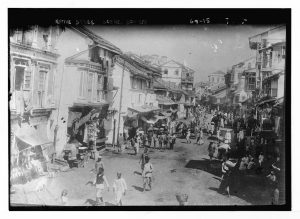
Thousands of people filled the streets from dawn until dusk. Hawkers called out their wares, hand-pulled rickshaws jostled for space with motor cars and horse-drawn carriages, and trams carried office workers through the commercial districts with remarkable efficiency.
The Commercial Heart of an Empire
The River Hooghly was Calcutta’s lifeblood.
Ocean-going ships arrived daily carrying passengers, machinery, textiles and mail from Britain. In return, they departed laden with tea from Assam, jute from Bengal, coal, manganese and manufactured goods destined for markets across the world.
Warehouses lined the riverbanks, while cranes loaded and unloaded cargo with military precision. For many young Britons seeking careers abroad, Calcutta represented opportunity. Trading houses, engineering firms, banks and insurance companies offered prospects that were often unavailable at home during the difficult economic years of the 1930s.
The city may no longer have been the political capital, but economically it remained one of the Empire’s most important ports.
A City of Two Worlds
Calcutta in 1934 was a city of striking contrasts.
In Dalhousie Square, elegant government offices reflected Britain’s imperial confidence. Government House stood as one of the grandest official residences in the Empire, while imposing buildings such as Writers’ Building and the General Post Office dominated the skyline.
Nearby, the European quarter featured broad avenues, fashionable hotels, exclusive clubs and well-kept gardens. Gentlemen in linen suits discussed business over gin and tonic while ladies gathered for afternoon tea beneath slowly turning ceiling fans.
Yet only a short distance away lay a very different Calcutta.
Bustling markets overflowed with spices, silk, fruit and flowers. Narrow lanes echoed with the sounds of craftsmen, traders and families going about their daily lives. Sacred temples stood alongside mosques, churches and synagogues, reflecting the city’s remarkable diversity.
The differences in wealth and living conditions were impossible to ignore, yet these contrasting worlds were bound together by commerce, culture and everyday life.
Life Along Chowringhee
Few streets better captured the spirit of Calcutta than Chowringhee Road.
Running alongside the vast Maidan, it was lined with elegant buildings, luxury hotels and smart shops. Horse-drawn carriages shared the road with the latest motor cars, while electric trams rattled steadily along their tracks.
From the pavement, visitors could admire the broad green expanse of the Maidan, often described as the “lungs of Calcutta.” Cricket matches, polo games and evening walks provided a welcome escape from the crowded city streets.
For British families, Chowringhee represented the familiar face of empire.
For Indians, it was also a place of employment, trade and opportunity.
Clubs, Cricket and Conversation
Social life for the British community revolved around clubs.
The Bengal Club and Tollygunge Club were centres of social life, where business relationships were forged as readily as friendships. Evenings often included dinner dances, bridge, tennis or conversations about politics, shipping schedules and life back in Britain.
Sport occupied an important place in colonial society. Cricket was enormously popular, but rugby, polo and tennis also attracted enthusiastic players and spectators.
These institutions offered comfort and familiarity to expatriates living thousands of miles from home.
A City That Never Stood Still
Perhaps the greatest surprise for a visitor to Calcutta in 1934 would have been its extraordinary diversity.
Bengalis, Anglo-Indians, British, Chinese, Armenians, Jews, Parsis and many other communities lived and worked in the city. Their languages, cuisines, religions and traditions created a rich cultural tapestry that gave Calcutta a character unlike any other city in the Empire.
It was a place where East and West met every day—not always comfortably, but always dynamically.
The Winds of Change
Despite its outwardly stable appearance, Calcutta in 1934 stood at a turning point.
India’s independence movement had gathered momentum. Mahatma Gandhi had recently suspended the Civil Disobedience Movement, but nationalist aspirations remained strong. Universities, newspapers and public meetings buzzed with discussion about India’s future.
Many British residents assumed imperial rule would continue for generations. History would prove otherwise.
Within little more than a decade, the Second World War would transform Britain and India alike, and by 1947, the Raj would come to an end.
Seen through the lens of history, Calcutta in 1934 occupies a fascinating moment—still unmistakably imperial yet already moving towards profound political and social change.
Did You Know?
In 1934, Calcutta possessed one of the largest tram systems in the world. While many cities later abandoned their trams, Kolkata continued to run them until recently, making it the only Indian city where a visitor could experience a direct link to the era of the British Raj. 2025 was the year when the city’s tram service finally ceased to exist.



0 Comments