
The Question is: In Books Does Fiction Mirror Reality?
It was close to midnight. After a hectic day, I was preparing to hit the bed when the phone rang. I heard my friend, Tom’s voice. ‘Anil does fiction mirror reality?’ he said in his distinct, lazy growl.
‘Tom,’ I yelled at him, ‘don’t you have a clock in your house? Do you know it’s nearly midnight? I am about to go to bed.’
‘Just answer this question. Then you can go to bed,’ he said.
‘What do you want to know? Be quick.’
‘The fiction you write. Do you base it on reality?’ His growl was getting more pronounced, which I knew meant he was either perplexed or rather sleepy.
I too was flummoxed by the question, for I had never really considered it in any depth. Does fiction mirror reality?
‘Not now, Tom. I will call you tomorrow.’ I slammed down the phone.
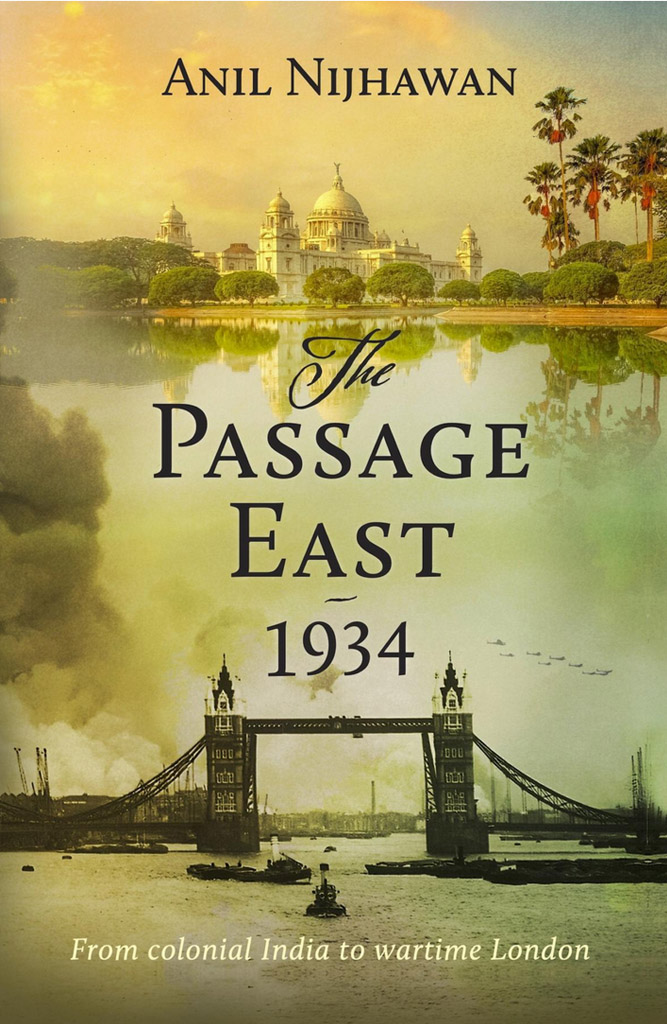
I sat at my desk the following day and considered Tom’s strange query. I knew he had been reading one of my books, The Passage East (1934), a historical novel spanning British India and wartime London, and guessed his query related to it.
It seemed to me that the answer was, yes. Fiction is often seen as an escape—a place where dragons soar, time bends, and impossible things feel real. But some of the most powerful storytelling doesn’t take us away from reality; it quietly brings us back to it.
At its core, fiction is built on truth. Not always factual truth, but emotional and psychological truth. A made-up world can still reflect real human struggles: fear, love, ambition, injustice, identity. When readers connect deeply with a story, it’s usually because they recognise something familiar beneath the surface of imagination.
Think about dystopian novels. While they may depict extreme or futuristic societies, they often exaggerate real-world issues—such as political control, environmental collapse, and social inequality. By pushing these elements further than reality, fiction sharpens our awareness of them. It acts more like a magnifying glass than a mirror.
Characters are another bridge between fiction and reality. Even in the most fantastical settings, believable characters anchor the story. Their decisions, flaws, and growth mimic real human behaviour. A hero’s internal conflict or a villain’s motivation often reflects struggles we see in everyday life, making the story feel authentic despite its fictional frame.
Fiction also allows us to explore perspectives we might never encounter otherwise. Through storytelling, readers can step into different cultures, identities, and experiences. This not only builds empathy but also deepens our understanding of the real world.
In the end, fiction doesn’t exist separate from reality—it reshapes it, questions it, and sometimes even predicts it. The line between the two is thinner than it seems. The best stories remind us that even in worlds that don’t exist, the truths within them often do.
What is your opinion? Do you agree with me or you believe I am misguided. If so tell me why.


0 Comments