
Raj Journal
# 4 Why Was Calcutta Called the “Second City of the Empire”?
The Rise of Britain’s Greatest City in the East
A Moment in Time
Calcutta, November 1934 – 8:15 a.m.
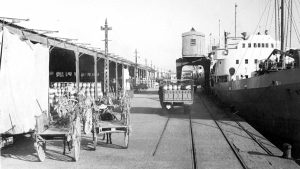
The River Hooghly is alive with activity.
Ocean-going steamships from London, Liverpool and Singapore lie alongside crowded docks as cranes swing into action, unloading machinery, textiles and mail while loading tea, jute and coal for markets around the world.
A tram rattles across Dalhousie Square, carrying clerks to banks and insurance companies. Outside Writers’ Building, civil servants hurry through its grand entrance, carrying files neatly tied with red tape. Across the Maidan, the dome of Government House glows in the morning sun, while horse-drawn carriages share the roads with the latest motor cars.
How did an Indian city earn such a remarkable title?
The story begins beside the River Hooghly in the late seventeenth century.
What began as a trading settlement of the East India Company gradually became the centre of British power in India. Following the Battle of Plassey in 1757 and the expansion of Company rule, Calcutta became the administrative capital of British India.
From Government House, governors-general oversaw territories across the subcontinent. Even after the capital moved to Delhi in 1911, Calcutta remained the Empire’s commercial heart, and its influence in 1934 was still immense.
The city’s greatest advantage was its location. Situated on the navigable River Hooghly and with access to the Bay of Bengal, it became one of the world’s busiest ports, essentially the gateway to India.
Every day, ships arrived carrying passengers, machinery, mail and manufactured goods from Britain. They departed laden with tea from Assam, jute from Bengal, coal, manganese and textiles.
Warehouses stretched for miles, while railway lines linked the port to every corner of northern India.
British trading firms, banks, insurance companies, shipping lines, and engineering and railway companies established magnificent headquarters around Dalhousie Square, the commercial district.
Hotels sprang up to house visiting merchants from Britain, Armenia, China, and many other countries.
It has been acknowledged that much of Britain’s trade with the East would have been impossible without this port city.
Architecture That Reflected Confidence
Visitors often remarked that parts of Calcutta looked strikingly European.
Government House, inspired by Kedleston Hall in Derbyshire, symbolised Britain’s confidence in its imperial mission.
Nearby stood Writers’ Building, the General Post Office, St Paul’s Cathedral, the High Court, and numerous imposing commercial buildings. They were not merely functional but demonstrated permanence, authority and prestige
Broad avenues, elegant gardens, and the vast green expanse of the Maidan gave the city an appearance unlike anywhere else in India.
More Than a British City
Yet Calcutta was never solely a British creation. Its character stemmed from its extraordinary diversity. Bengalis, Anglo-Indians, Armenians, Chinese, Jews, Parsis, Marwaris and Europeans all lived and worked in the city, making fortunes from offices overlooking streets lined with trams, hand-pulled rickshaws and bustling markets.
Temples stood alongside churches, synagogues and mosques. Markets sold local spices beside imported European goods. English, Bengali, Hindi and many other languages echoed through the streets.
A Centre of Learning and Culture
Calcutta was not only a city of business. It was also one of Asia’s intellectual capitals, home to distinguished writers, artists and reformers whose influence extended far beyond Bengal.
The University of Calcutta, founded in 1857, attracted students from across the subcontinent. Newspapers flourished, theatres entertained enthusiastic audiences, and literary societies debated politics, philosophy and science.
This blend of commerce and culture made Calcutta unique.
By 1934, however, the city stood at a turning point. India’s independence movement was gaining momentum. Political debate grew livelier, and many educated Indians questioned the future of British rule.
The transfer of the capital to Delhi had reduced Calcutta’s political importance, but its commercial influence remained immense, and it retained its reputation as one of the Empire’s greatest urban centres.
People continued to arrive from across India seeking education, employment and opportunity.
Why “Second City of the Empire”?
The phrase was never an official title. Instead, it reflected the admiration of travellers, businessmen and politicians who regarded Calcutta as Britain’s most important city outside the United Kingdom.
Its importance rested on several foundations:
-
It was the commercial heart of British India.
-
It possessed one of the world’s busiest ports.
-
It was the centre of the jute trade.
-
It connected Britain with much of Asia.
-
It was renowned for its architecture, education and culture.
-
It embodied the ambition and scale of the British Empire in the East.
Whether one admired or criticised the Empire, few could deny Calcutta’s extraordinary significance during this period.
From My Research Desk
While researching The Passage East 1934, I found myself returning repeatedly to old maps and photographs of Calcutta.
The buildings are impressive, but it is the people who truly bring the city to life: the dockworkers unloading ships on the Hooghly, the clerks crossing Dalhousie Square with bundles of documents, the tram conductors ringing their bells along Chowringhee, and the families strolling across the Maidan as evening brings relief from the day’s heat.
Understanding why Calcutta became known as the “Second City of the Empire” helps us appreciate not only its economic importance but also its remarkable human story—a city where countless cultures met, traded, argued, celebrated and shaped history together.
Looking Back
Cities earn great reputations not only through power or wealth, but through the lives lived within them.
In 1934, Calcutta was a place of opportunity and ambition, of magnificent buildings and crowded markets, of intellectual debate and commercial enterprise. It was a city that connected Britain with India and the wider world, while also becoming home to millions whose lives had little to do with imperial politics but everything to do with family, work and community.
Today, the name has changed to Kolkata, and the Empire that gave rise to the famous nickname has long since disappeared.
Yet the city’s architectural splendour, cultural richness and enduring spirit continue to remind visitors why it once occupied such an important place in world history.
Have you walked through Kolkata’s historic centre or stood beside the Hooghly imagining the great steamships of the Raj? I’d love to hear your impressions or family stories in the comments section.



0 Comments