Who Were the Anglo-Indians in British India? The Forgotten Community That Bridged Two Worlds

Posted On July 18, 2026

l

by Anil Nijhawan

The Raj Journal

#3   Who Were the Anglo-Indians in British India? The Forgotten Community That Bridged Two Worlds

Calcutta, March 1934

The morning tram clattered through Chowringhee as office workers hurried towards Dalhousie Square. Among them was a young railway clerk, immaculately dressed in a pressed white shirt and tie. He spoke English with ease, enjoyed cricket on Saturdays, attended church on Sundays and called India home. Yet, despite being born in Calcutta, he often found himself caught between two worlds.

He was Anglo-Indian.

By 1934, the Anglo-Indian community had become one of the most distinctive and influential communities in British India. Their story was not simply one of mixed ancestry; it was a story of identity, service, loyalty and belonging during a period of profound political and social change.

Who Were the Anglo-Indians?

In the eighteenth and early nineteenth centuries, the term Anglo-Indian was sometimes used to describe British people living in India. By the early twentieth century, however, the term had acquired its modern meaning. It referred to people of mixed European—most commonly British—and Indian ancestry who formed a recognised community with its own traditions, institutions and identity.

Many Anglo-Indians spoke English as their first language, were Christians by faith, and were educated in English-medium schools. While they shared many aspects of British culture, India was their birthplace and home.

A Community Between Two Worlds

Life for Anglo-Indians was often shaped by a delicate balancing act.

Within British society, they were not always regarded as fully British. At the same time, many Indians viewed them as closely associated with the colonial administration.

This sense of existing between two worlds was both a challenge and a source of resilience. Anglo-Indians developed a strong community identity, supported by churches, schools, social clubs and charitable organisations. Families often knew one another across generations, creating close-knit networks that provided stability and support.

The Railway Family

Perhaps no institution employed more Anglo-Indians than the railways.

As India’s railway network expanded across the subcontinent, Anglo-Indians became station masters, locomotive drivers, guards, telegraph operators, booking clerks and engineers. Their fluency in English and familiarity with British administrative systems made them valuable employees at one of the world’s largest railway networks.

Railway colonies became distinctive Anglo-Indian communities. Children grew up surrounded by the sounds of steam locomotives, whistles and bustling stations, while generations of the same families often followed similar careers.

For many Anglo-Indians, the railway was more than an employer—it was a way of life, while Calcutta was home to one of the largest Anglo-Indian populations.

Neighbourhoods such as Bow Barracks became closely associated with the community.

Music drifted from open windows, children played in the courtyards, and neighbours gathered to celebrate Christmas, Easter and family occasions. Western music, dancing and community events were important parts of social life, reflecting both European influences and uniquely Anglo-Indian traditions.

A Distinctive Culture

By 1934, the Anglo-Indian community had developed a culture that was unmistakably its own.

Meals might combine British recipes with Indian spices. Family celebrations blended traditions from both sides of their heritage.

Music played a central role in community life. Piano recitals, dances and amateur theatre performances were popular, while brass bands often accompanied public celebrations.

Sport also flourished. Cricket, hockey, tennis and rugby brought families together and reinforced the community’s strong emphasis on education, discipline and teamwork.

Uncertain Times

Although life in 1934 could appear settled, significant changes were already under way.

India’s independence movement was gathering momentum. Political reforms were being debated, and questions about the country’s future became increasingly difficult to ignore.

For many Anglo-Indians, uncertainty lay ahead.

Their careers were closely tied to institutions established during British rule, and no one could predict how their place in society might change if India gained independence.

Following Indian independence in 1947, many Anglo-Indians chose to remain in India, while others emigrated to Britain, Australia, Canada and New Zealand.

Today, their contribution to India’s railways, schools, armed forces, music, sport and public service is increasingly recognised. Buildings such as Bow Barracks in Kolkata remain tangible reminders of a community that played an important role in the country’s history.

Their story reminds us that history is rarely divided into simple categories. It is shaped by people whose identities reflect the complexity of the world they live in.

From My Research Desk

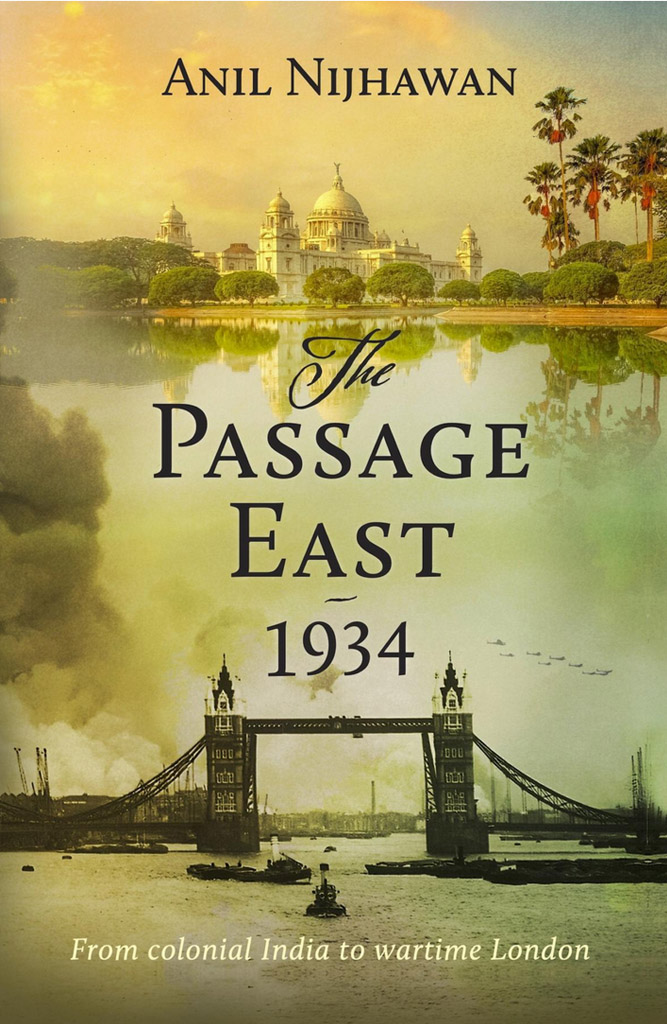
While researching The Passage East 1934, I became fascinated by the Anglo-Indian experience. History often tells us about governors, generals and political leaders, yet it is the lives of ordinary families that reveal how people adapted to a changing world.

Historical fiction gives us the opportunity to step into those lives—not simply to observe history, but to experience it through the hopes, friendships and challenges of people whose voices are too often overlooked.

Did You Know?

The origin of Railway Mutton Curry. According to popular accounts within the Anglo-Indian community, the dish was developed to suit British tastes while using Indian spices. It became associated with dining cars and railway refreshment rooms, where it was served to travellers crossing the subcontinent. While the exact origin is debated, the curry remains one of the best-known examples of Anglo-Indian cuisine and is still recreated by chefs today.

British India possessed the largest rail network in Asia and was among the largest in the world.

The Anglo-Indian community in India had its own constitutional recognition. When India became independent in 1947, the Anglo-Indian community was considered so distinctive that the Constitution of India specifically defined who qualified as an Anglo-Indian. For decades, the President of India could nominate Anglo-Indian members to the Lok Sabha if the community was considered underrepresented. This provision remained in place until 2020.

Do you have Anglo-Indian roots, or do you have family stories connected to the community? I’d be delighted to hear your memories and reflections in the comments section. Every family story helps preserve an important chapter of our shared history.

Written by Anil Nijhawan

View my books

Related Posts

Comments

0 Comments

Submit a Comment

Your email address will not be published. Required fields are marked *