
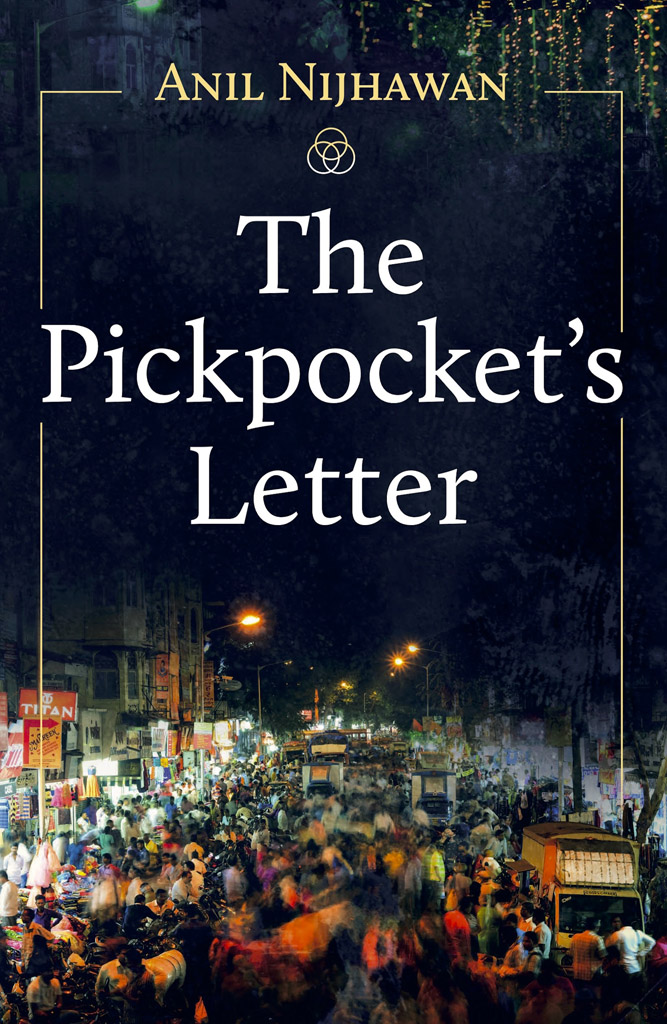
The Pickpocket’s Letter
He cannot read. He cannot write. But he remembers everything.
Seventeen-year-old Deenu has survived abandonment, institutional neglect, and the quiet machinery of exploitation that preys on the invisible. Illiterate but fiercely observant, he dictates a letter to India’s Prime Minister — a testimony of a life shaped by orphanages, betrayal, and the brutal undercurrent of child trafficking in Bengaluru.
When his closest friend is murdered, Deenu flees to Kolkata, carrying nothing but a stolen photograph and a question he cannot silence: who decides which lives matter?
Unaware that the image he holds connects powerful men to buried crimes, Deenu becomes the target of Vikram — a trafficker who believes silence is the only protection worth buying.
As hunter and hunted move through the city’s shadows, survival becomes reckoning.
The Pickpocket’s Letter is a literary crime novel and social justice thriller set in India — a story of memory, class, and the cost of being unseen. Taut, emotionally powerful, and ultimately hopeful, it asks what justice means in a world where some lives are meant to disappear.
What the readers say:
… a powerful, brave, and brilliantly crafted work—urgent in its message, addictive in its storytelling, and impossible to forget. A novel that stays with the reader long after the final page…
… it’s rare to find a book that confronts injustice so directly while still offering humour, warmth, and moments of surprising beauty…
For readers of The White Tiger, A Fine Balance and The Kite Runner, this literary crime novel explores injustice, survival, and the fragile architecture of power.
Editorial Review
S Helme
This is marvellous. Your narrator’s Voice is distinctive and quite adorable. Even your minor characters are interesting. Your Plot is colourful and develops in an exciting progression. And it has good balance; Deenu’s quest to reunite the two separated lovers parallels his own longing to be reunited with his lost mother, and they both come together in the happy ending. I love the device of his addressing his narration to Modi.
The story of the Nayak couple jumping off the building in front of their children is among the most shocking I have ever read.
The foreshadowing of his murder of Vikram is skilfully done.
Though I wasn’t familiar with some of the vocabulary, I didn’t mind at all looking the words up on Google. It lent familiarity to the foreign setting (to me). You colourfully painted the tough streets of Bengaluru and Kolkata. The details in this story are wonderful; I loved Saira’s boxes full of puppets. I found it, despite the tragedy, quite humorous; you even managed to give us a hopeful ‘triumph over tragedy’ happy ending.
A young pickpocket becomes a champion of love. Young Deenu dictates an impassioned letter to PM Modi into his Sanyo tape recorder. ‘You must look deeper into why there are so many abandoned children in this country,’ he says. Sanju types the transcripts for him, on the promise of ‘more juicy bits to come’.
Deenu has experienced it all—raised in an orphanage, kidnapped and beaten by gangsters at age 14, forced to steal for his daily bread, sexually abused by staff members in return for chocolate bars, slapped for speaking out, in thrall to people with ‘different agendas’. He doesn’t know his real name—Deenu is a nickname. He lives in Kolkata, but he used to live in Bengaluru, where he ‘had a steady job working as a pickpocket’.
There is a villain —the evil trafficker Vikram —who wants to turn Deenu into keema, and a mission: a pocket-picked wallet sets Deenu on a journey to reunite two lovers. If only he could be reunited with his lost mother. In a world full of hate, Deenu is loving.
The narration’s voice is that of the child Deenu, which is charming. We see the streets of Bengaluru and Kolkata through his eyes. His good heartedness takes for granted the poor conditions and care, the poverty, the abuse; fleeing from ‘the RTP’ (robbers, thieves and pickpockets); the children suffering ‘like the crunching of cockroaches under… feet’. The police are no help with his problems—they only try to extort money from the victims.
This makes it all the more heartbreaking to us. If not for this relative degree of separation, we’d not be able to bear reading it. All the little stories about life on the streets—tragic stories they are, but Deenu makes them humorous. Each little scene is colourful. The details are wonderful, tragi-comic and heart-warming. There is an intricate climax to the story, where everything seems disastrous for everybody, but Nijhawan manages to give us a hopeful ‘triumph over tragedy’ happy ending. I almost cried.
There is liberal use of Hindi words, which I had to look up on Google, but I didn’t mind, as they lend a sense of familiarity to the foreign (to me) setting and paint the scenes through the characters’ eyes.
Like PM Modi, we must learn from the sufferings of children like Deenu. It is our responsibility to fight for a world where every child grows up in love and security.
Reader Reviews
This is the fascinating tale of an orphan abducted from a children’s home in India by a gang and forced to rob strangers in the street. I first read the novel five years ago when it was released under a previous title. So I was intrigued to discover it had been revised and republished under a new name. The book still gives the reader a colourful snapshot of life in modern-day India with all its sights and sounds. But there is now a fresh ending which brings an optimistic closure to events.
The main thrust of the book deals with the young man’s hardship and struggles as he tries to escape his past and moves to Kolkata. Sadly, once there, he falls again under the spell of the evil gang masters who manipulated him before.
Although the book reflects how India’s streets have been blighted by the conduct of criminals, there is plenty of humour and there are some touching romantic moments.
Despite his odious crimes, the main character exhibits a compassionate side when he finds a love letter and seeks to reunite two lost sweethearts.
This is an inspiring story about how a boy born into poverty manages to survive and thrive against the odds. It is a well-written book encompassing moments of sadness, inhumanity, tragedy, humour and hope.
This was not the first of Anil’s books I had read and, as ever, I was transported to India with ease thanks to the author’s wonderfully descriptive writing. The story of an orphaned boy forced into a life of pickpocketing, while dark and difficult at times, still manages to convey hope with humour and humanity. It really is a testament to the power of the human spirit to prevail despite the odds and comes highly recommended.